
Uncategorized
What are the Best Cognitive Peptides?

May
Cognitive peptides are short chains of amino acids studied for their potential influence on brain function. Researchers examine how these compounds may interact with pathways involved in memory, learning, attention and stress responses. Interest in these peptides has grown as studies continue to explore mechanisms linked to cognitive-related neural pathways.
Among the range of peptides investigated in research, some are explored for their association with cognitive mechanisms. P-21, Semax, Selank and Pinealon have been studied for their roles in neurotransmitter modulation, neuroprotective signaling, cellular regulation and central nervous system pathways in experimental models. Each peptide is examined using different mechanistic approaches in controlled studies.
One peptide gaining increasing interest is P-21, which is being investigated in experimental models for its effects on neurogenesis, synaptic plasticity, and behaviors associated with learning and memory.
Explore P-21 Peptide from Peptide Works, a cognitive peptide studied for memory, learning, and neuroprotection in brain research.
How Does P-21 Peptide Support Memory and Cognition?

P-21 is studied as a cognitive peptide within the class of nootropic peptides. It supports memory and cognition by enhancing neurotrophic signaling, which is linked to neuronal survival and synaptic plasticity.
Animal research shows that P-21 can increase BDNF-related pathways and promote neurogenesis in the dentate gyrus of the hippocampus. These effects are associated with improvements in spatial learning and object recognition memory in rodents.
In Alzheimer’s disease mouse models, P-21 has been reported to restore synaptic markers and improve dendritic structure. Studies also suggest reductions in tau hyperphosphorylation and beta-amyloid levels, along with improvements in learning and memory deficits.
P-21 is engineered with an adamantane-based modification to increase lipophilicity. This modification enhances its ability to cross the blood–brain barrier, enabling central nervous system activity in animal studies.
Discover Semax Peptide from Peptide Works, a synthetic peptide explored for focus, brain recovery, and resilience in cognitive studies.
Does P-21 Peptide Cross the Blood–Brain Barrier?
Yes. Preclinical research consistently describes P-21 (P021) as a blood–brain barrier (BBB)–permeable peptide. Studies report it is a small CNTF-derived compound that can cross the BBB and produce measurable effects in the brain in animal models.
P-21 was engineered with an adamantane (adamantylated) modification, which increases lipophilicity and stability. This modification is reported to enhance blood–brain barrier permeability and reduce enzymatic degradation.
Experimental studies in mice further support this, showing that P-21 is blood–brain barrier permeable and produces central nervous system activity after administration, consistent with brain penetration.
P-21 is commonly studied for its memory and neuroprotective effects, while Semax is studied for its role in focus and cognitive recovery.
How Does Semax Peptide Support Memory, Focus, and Brain Recovery?

Semax is a synthetic cognitive peptide studied for memory, focus, and brain recovery. Research suggests it may increase brain-derived neurotrophic factor (BDNF) in the hippocampus, a region involved in learning and synaptic plasticity. Elevated BDNF in experimental studies is associated with improved memory, attention, and learning.
Studies also indicate that Semax exhibits neuroprotective effects. It has been investigated for reducing oxidative stress, supporting cerebral blood flow and protecting neurons during ischemic injury. These mechanisms have led to continued research into Semax for neurodegenerative conditions, stroke recovery and cognitive resilience.
While Semax is studied for learning and recovery, Selank is explored for its effects on stress response and emotional balance.
Can Selank Peptide Reduce Anxiety While Improving Cognitive Balance?
Selank is a cognitive peptide studied for its anxiolytic effects and influence on emotional regulation. Research indicates that Selank may modulate GABAergic activity along with serotonin and dopamine pathways, which are involved in stress response and mood stability. Studies also suggest Selank may affect BDNF signaling, a factor associated with learning, memory, and cognitive function.
Unlike traditional anxiolytics such as benzodiazepines, Selank has been investigated in research models for reducing anxiety without significant sedation or dependence-related effects. Experimental findings also suggest potential neuroprotective properties, supporting cognitive clarity during stress conditions. These combined effects have led to continued research into Selank for stress management and cognitive balance.
Since each peptide offers different research strengths, comparing them side by side helps highlight how they may complement one another in cognitive studies.
Shop Selank Peptide at Peptide Works, an anxiolytic peptide researched for reducing stress, stabilizing mood, and supporting cognition.
How Does Pinealon Peptide Support Cognitive Function and Brain Aging?
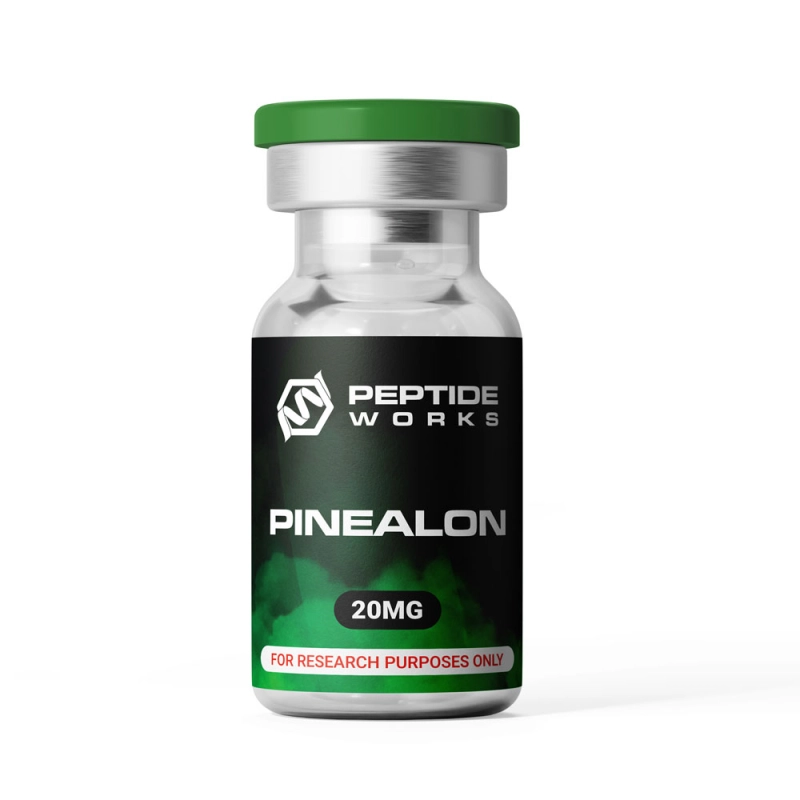
Pinealon (EDR peptide) is a short peptide studied for its effects on neuronal cells in aging-related models. Preclinical research shows it can regulate gene expression and protein synthesis in neurons, processes linked to cellular function.
Studies report that Pinealon is associated with activation of antioxidant enzyme systems and reduction of oxidative stress, along with decreased intensity of neuronal cell death (apoptosis).
Experimental models show that Pinealon can preserve neuronal structure by preventing the loss of dendritic spines and supporting dendritic morphology under neurodegenerative conditions.
Some animal studies and limited clinical observations report normalization of behavioral responses and improvements in memory, though the overall evidence remains limited.
Overall, Pinealon is studied for its role in supporting cognitive function by regulating gene expression, oxidative stress pathways, and neuronal structure in aging-related models.
Check out Pinealon Peptide from Peptide Works, a research peptide explored for cognitive function and neuronal activity.
Cognitive Peptides Compared: P-21, Semax, Selank, and Pinealon
Each cognitive peptide is studied for distinct mechanisms. P-21 is investigated for its role in memory and synaptic development. In the Semax vs Selank comparison, Semax is associated with focus and neuroprotection, while Selank is studied for its effects on anxiety and emotional balance, and Pinealon is studied for its role in neuronal regulation of gene expression and protein synthesis in brain cells.
Here’s a direct comparison:
| Peptide | Key Research Focus | Main Mechanisms |
|---|---|---|
| P-21 | Memory, learning, neurodegeneration | Influences BDNF signaling, supports hippocampal neurogenesis, reduces tau and amyloid in experimental models, designed for blood–brain barrier penetration |
| Semax | Focus, neuroprotection, brain recovery | Increases BDNF expression, reduces oxidative stress, supports cerebral blood flow |
| Selank | Anxiety reduction, mood balance, cognition | Modulates GABA and monoamine pathways, influences BDNF signaling, demonstrates anxiolytic effects in research models |
| Pinealon | Brain aging, cognitive function, neuronal regulation | Regulates gene expression and protein synthesis in neurons, reduces apoptosis and supports antioxidant enzyme activity, preserves dendritic structure in experimental models |
This comparison highlights how each peptide plays a distinct role in research:
- P-21 → long-term memory and synaptic repair.
- Semax → improved focus and cognitive resilience.
- Selank → stress regulation and balanced cognition.
- Pinealon → neuronal regulation and cognitive support.
Taken together, these differences illustrate how cognitive peptides may open multiple paths of exploration, from memory enhancement to stress regulation, as the field advances.
With comparisons made, one of the most common questions is whether these peptides are considered safe in research.
Are Cognitive Peptides Like P-21, Semax, and Selank Safe?

Research on cognitive peptides such as P-21, Semax, Selank, and Pinealon suggests they are generally well tolerated in controlled studies. P-21 is being investigated for its stability in the central nervous system, while Semax and Selank are studied for anxiolytic and cognitive effects with less sedation than traditional agents.
However, these peptides remain under investigation. Study outcomes vary, with some Semax studies reporting mild effects, such as headaches or nasal irritation, following intranasal administration. At Peptide Works, these peptides are provided strictly for laboratory and research purposes, supporting responsible study worldwide. As research progresses, safety data will remain important for understanding their role in biological systems.
Looking beyond safety, researchers continue to explore how cognitive peptides may shape future developments in neuroscience.
The Future of Cognitive Peptides
Research on cognitive peptides such as P-21, Semax, Selank, and Pinealon continues to grow, offering new insights into memory, focus, and emotional balance. Studies explore their roles in neuroprotection, recovery mechanisms, and long-term brain resilience.
As scientific understanding advances, these peptides may help researchers better understand how the brain adapts and recovers. At Peptide Works, we provide high-quality research peptides worldwide, supporting continued exploration into cognitive health and neuroscience.
All peptides and compounds mentioned are strictly for research purposes only and not for human use.
References
(1) Baazaoui N, Iqbal K. Prevention of dendritic and synaptic deficits and cognitive impairment with a neurotrophic compound. Alzheimers Res Ther. 2017 Jun 27;9(1):45.
(2) Li B, Wanka L, Blanchard J, Liu F, et al. Neurotrophic peptides incorporating adamantane improve learning and memory, promote neurogenesis and synaptic plasticity in mice. FEBS Lett. 2010 Aug 4;584(15):3359-65.
(3) Medvedeva EV, Dmitrieva VG, Povarova OV, Limborska SA, et al. The peptide semax affects the expression of genes related to the immune and vascular systems in rat brain focal ischemia: genome-wide transcriptional analysis. BMC Genomics. 2014 Mar 24;15:228.
(4) Volkova A, Shadrina M, Kolomin T, Andreeva L, et al. Selank Administration Affects the Expression of Some Genes Involved in GABAergic Neurotransmission. Front Pharmacol. 2016 Feb 18;7:31.
(5) Dijk DJ, Archer SN. Circadian and Homeostatic Regulation of Human Sleep and Cognitive Performance and Its Modulation by PERIOD3. Sleep Med Clin. 2009 Jun;4(2):111-125.
(6) Asua D, Bougamra G, Calleja-Felipe M, Morales M, Knafo S. Peptides Acting as Cognitive Enhancers. Neuroscience. 2018 Feb 1;370:81-87.
(7) Khavinson V, Linkova N, Kozhevnikova E, Trofimova S. EDR Peptide: Possible Mechanism of Gene Expression and Protein Synthesis Regulation Involved in the Pathogenesis of Alzheimer’s Disease. Molecules. 2020 Dec 31;26(1):159.
ALL CONTENT AND PRODUCT INFORMATION AVAILABLE ON THIS WEBSITE IS FOR EDUCATIONAL PURPOSES ONLY.
DISCLAIMER: These products are intended solely as a research chemical only. This classification allows for their use only for research development and laboratory studies. The information available on our Peptide Works website: https://peptide-works.com/ is provided for educational purposes only. These products are not for human or animal use or consumption in any manner. Handling of these products should be limited to suitably qualified professionals. They are not to be classified as a drug, food, cosmetic, or medicinal product and must not be mislabelled or used as such.
